
English| EUR
Suggested for you
More currencies
Choose a language
Seven Magic Mountains sits 10 miles south of the Las Vegas Strip along Interstate 15, a 15- to 20-minute drive under normal traffic conditions. The installation occupies open desert on the west side of the highway with dedicated parking accessed via Las Vegas Boulevard. Most visitors leave from the Strip corridor between dawn and mid-morning to secure cooler temperatures and better light for photography.
Quick answer
Seven Magic Mountains from Las Vegas Strip requires a 10-mile southbound journey on Interstate 15, typically 15 to 20 minutes by car. The site operates 24 hours daily with free admission, though the best departure window from the Strip falls between 6:00 and 9:00 AM to avoid midday desert heat and peak visitor traffic. Rideshare drop-off, rental car, and organized shuttle transport all serve the installation's parking area on South Las Vegas Boulevard.
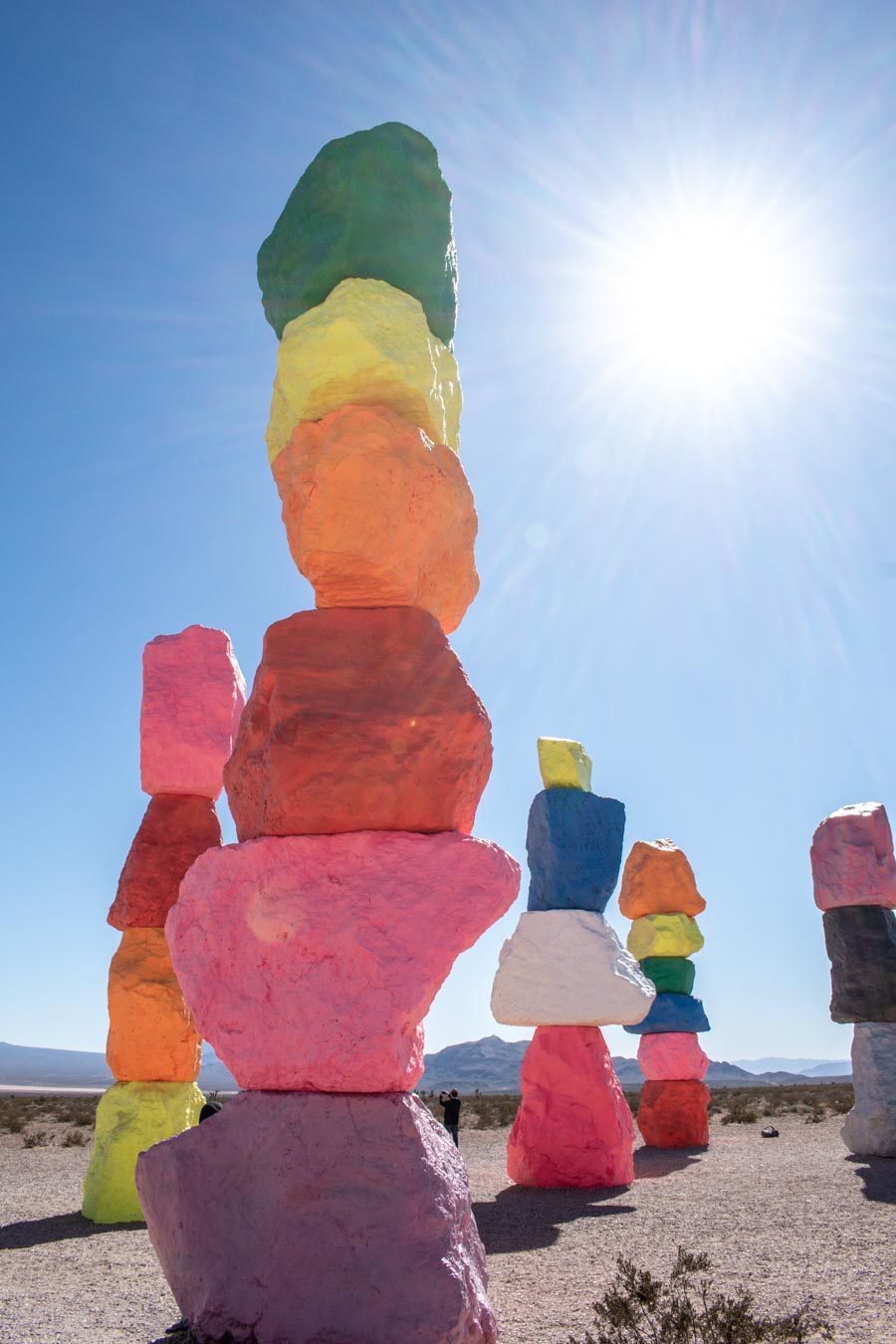
The neon corridor of the Las Vegas Strip ends abruptly where Interstate 15 cuts south through raw Mojave terrain, and exactly 10 miles along that route stands Ugo Rondinone's Seven Magic Mountains—33 feet of stacked, day-glo boulders rising from beige hardpan. The installation was designed as a temporary intervention, yet it remains one of the most-photographed land art works in the American West, drawing visitors who measure the journey not in miles but in the cognitive gap between casino artifice and desert silence. Reaching the colorful towers from the Strip requires navigating Las Vegas Boulevard's southern extension or merging onto I-15 southbound toward Jean and Primm. Traffic on this stretch thins considerably past the airport, and the installation's parking lot appears on the west side of the highway with clear signage at mile marker 25. Rideshare drivers know the coordinates, rental agencies stock the route in their GPS databases, and a handful of tour operators schedule morning departures that bundle the art site with other regional stops. The drive itself takes 15 to 20 minutes under normal flow, though weekend mornings between 10:00 AM and 2:00 PM can add delays as the lot nears capacity. The desert location imposes its own schedule. Summer surface temperatures exceed 110°F by noon, turning the installation into a brief photo opportunity rather than a sustained visit. Early departures from the Strip—before 9:00 AM—align with the soft light photographers prefer and the thermal comfort required for a longer stay. Winter and spring extend the comfortable visiting window into late morning, but the principle holds: leave the Strip early, and the landscape grants both time and better images. The installation itself is free to enter, open around the clock, and requires no reservations, so timing is dictated entirely by weather and crowd density rather than ticketed slots. Seven Magic Mountains from Las Vegas Strip represents one of the simplest day-trip geometries in the region—a straight shot south with no turns, no fees, and no need for advance planning beyond checking the forecast. The art is visible from the highway, but standing among the limestone totems requires only the decision to leave the city before the desert becomes inhospitable.
“The installation was designed as a temporary intervention, yet it remains one of the most-photographed land art works in the American West.”
Seven Magic Mountains is located in the desert approximately 25 miles south of the Las Vegas Strip. Driving via Interstate 15 is the most direct and reliable method to reach the site.
I-15 South to Exit 12 (Jean, NV)
I-15 South to S Las Vegas Blvd
The site is located at S Las Vegas Blvd, Las Vegas, NV 89054. Parking is available in a designated dirt lot adjacent to the installation, but there is no public transit service to this remote location.
The best arrival window is 06:00–09:00 to avoid peak midday desert heat and large crowds for a better photography experience. Planning your visit during this early interval ensures optimal lighting conditions while minimizing exposure to high temperatures.
—
Early weekday visits offer the quietest experience for photography.
Mild, 70°F–85°F
Spring provides temperate weather before the extreme heat of summer.
Comfortable, 70°F–85°F
Autumn is ideal for those avoiding summer heat while maintaining clear skies.
Extreme heat, 100°F+
Summer requires strict adherence to early morning arrival to avoid dangerous temperatures.
Verdict: The best time to visit is Tuesday to Thursday between 06:00 and 09:00 during the months of April or October.
Seven Magic Mountains is an outdoor art installation accessible to visitors throughout the entire week. The site remains open 24 hours a day, providing continuous access for public viewing.
Seven Magic Mountains is a public art installation accessible to all visitors at no cost. There are no ticket requirements or reservation fees for entry.
Verdict: A typical adult pays 0 USD for admission, as there are no ticket fees or entry costs required for this public site.
The desert location and open-air setting require specific preparations beyond what you'd bring to a typical gallery.
Everything you need to know about seven magic mountains from las vegas strip
Travelers typically reach the site by driving south via I-15, which takes approximately 30 minutes from the city center. Visitors planning a trip to the seven magic mountains from las vegas strip often opt for guided shuttle services if they prefer not to drive.
Entrance to the site is 0 USD as it is a free public art installation. You do not need to purchase a ticket to enjoy this landmark.
The site is open daily from 00:00–23:59. This 24-hour access allows visitors to plan their visit at any time of the week.
The best arrival window is 06:00–09:00 to avoid peak midday desert heat and large crowds. This timing provides a better photography experience for those visiting the desert site.
There are no permanent restrooms or visitor facilities located at the site. Visitors are encouraged to plan accordingly before heading out to the desert.
Families are welcome to visit these large-scale colorful sculptures with children. It is important to keep children on the paths to protect the desert environment and the artwork.
Most visitors spend between 30 and 60 minutes exploring the area and taking photos. This duration allows enough time to walk around the boulder stacks without feeling rushed.